
Down syndrome
Your child can learn and grow in so many ways. The earlier we start together, the more you can do to help with talking, eating and play from the very beginning.
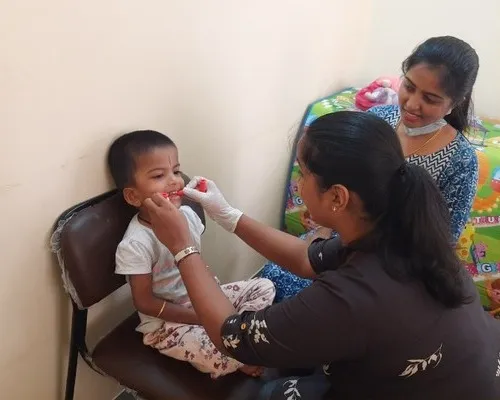
Signs parents often notice
- Low muscle tone in the mouth
- Tongue often resting forward
- Slow to babble or talk
- Speech hard to understand
- Understands more than says
- Difficulty chewing or drinking
How we can help
Start in the early months
Play, songs and touch that build listening, attention and early sounds from infancy.
Strong mouth muscles
Oral placement exercises build the control needed for eating and clear speech.
Signs, pictures and words
Signs and pictures help your child communicate early, and they support spoken words.
Eating with ease
Help with sucking, chewing and moving on to new textures safely.
More about down syndrome
What it is
Down syndrome is a genetic condition caused by an extra copy of chromosome 21. It is usually diagnosed by doctors before birth or soon after. Children with Down syndrome often have low muscle tone, which affects eating and speech, and many learn best by seeing rather than just hearing.
What helps
- Early intervention from the first months
- Oral placement therapy to build strength and control in the lips, tongue and jaw
- Speech therapy with signs, pictures and lots of visual cues
- Feeding therapy for sucking, chewing and new textures
- Occupational therapy for hand skills and daily routines
You can join sessions, and we give you simple activities for home. Read more about oral placement therapy.
When to get help
The best time is now, whatever your child’s age. It is never too late to work on communication. Contact us to plan a first visit.
Questions parents ask
When should therapy start for a baby with Down syndrome?
As early as you like. We see babies from 3 months. Early therapy usually focuses on feeding, listening, play and early sounds, with simple things to do every day.
Will signing stop my child from talking?
No. Signing gives your child a way to share ideas while speech is still developing. Many children drop signs naturally as words come.
Should my child's hearing be checked?
Yes. Hearing loss and ear infections are more common in children with Down syndrome, and even mild loss affects speech. Doctors advise regular hearing checks, so ask your paediatrician about this.
Every child is different. If this seems right for your child, please ask your therapist for more details.
Therapies that help
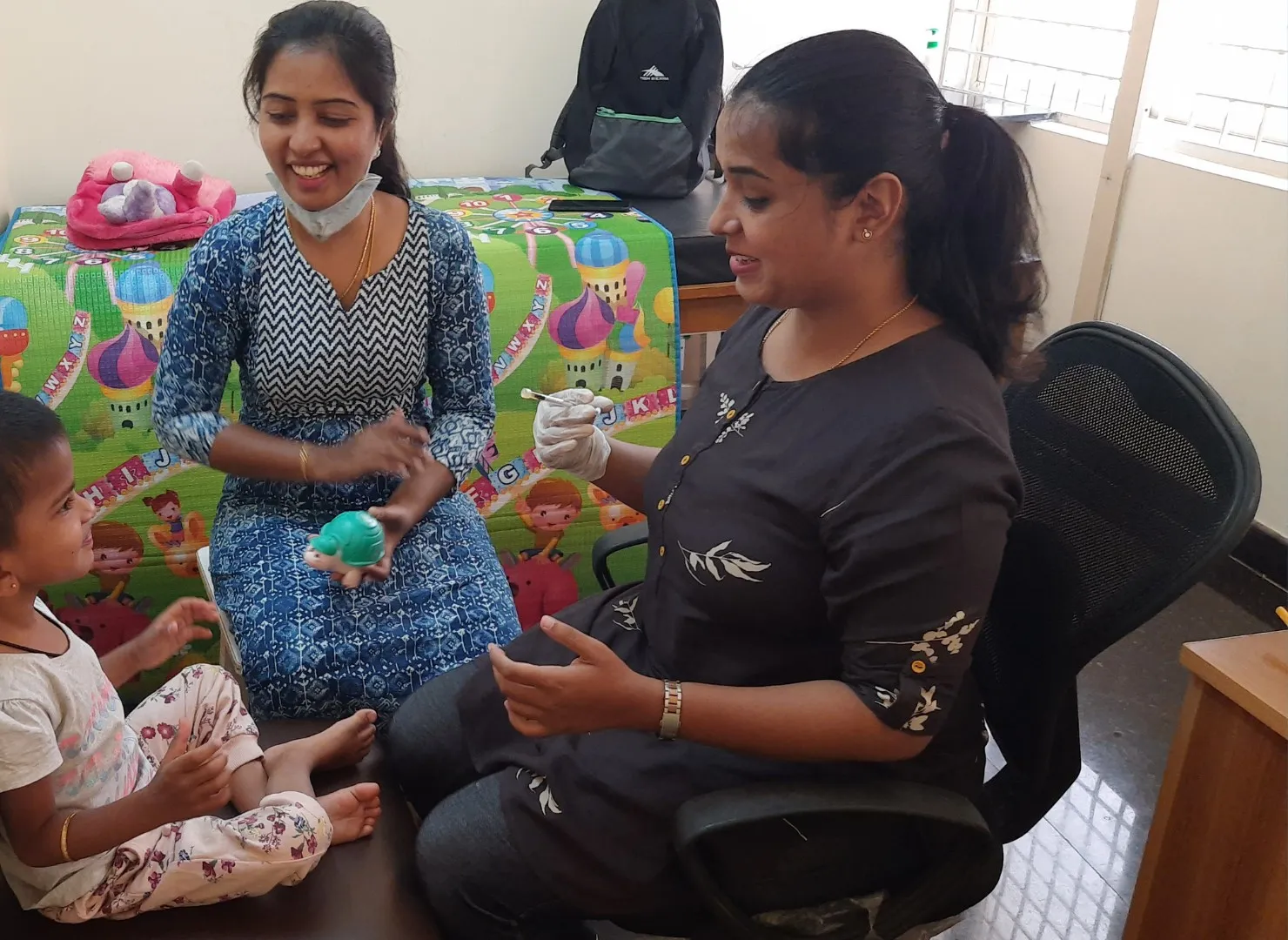
Early intervention
For babies and toddlers, from 3 months to about 5 years, who are slow to reach milestones.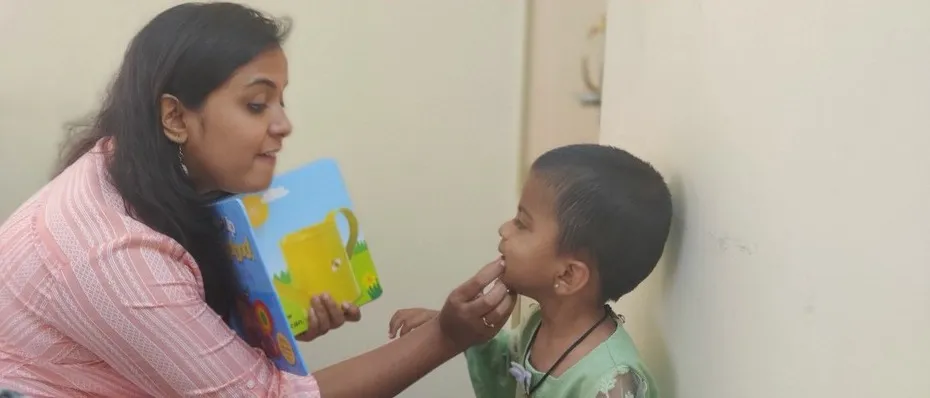
Speech therapy
For late talkers, unclear speech, stammering and apraxia.Oral placement therapy
Hands-on work that builds jaw, lip and tongue control for clearer speech and easier eating.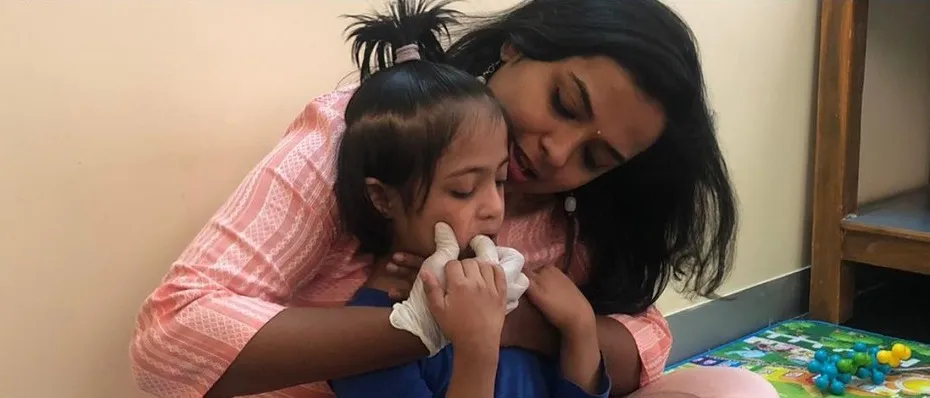
Feeding therapy
For children who eat very few foods, find chewing hard, or won't move on to new textures.
Worried about your child?
You don’t need a diagnosis to talk to us. Call or WhatsApp, and we’ll help you work out the next step.