
Feeding therapy
When every meal ends in tears, it wears the whole family down. We help your child eat with more comfort, gently, and never by force.
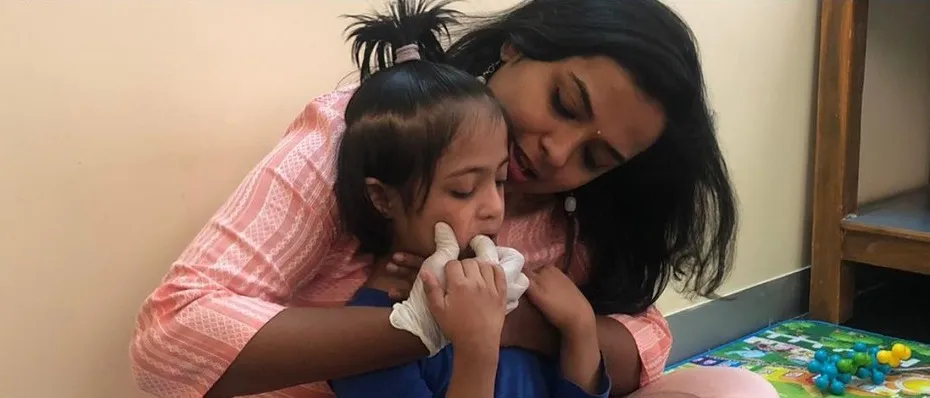
See what it looks like at Turtle Express
When it is often recommended
- Eats only a handful of foods
- Still only eats mashed food
- Gags or coughs at meals
- Holds food in the cheeks
- Swallows without chewing
- Struggles with cup or straw
- Mealtimes end in tears
How we work
We look at how your child eats
How the jaw, lips and tongue move when eating and drinking, and what mealtimes are like at home.
Start with what feels safe
We begin with foods your child already accepts and build slowly from there.
Build the mouth skills
Chewing, biting and drinking practice, which may draw on TalkTools feeding methods.
Calmer mealtimes at home
Easy ideas for offering new foods and keeping the table stress-free for everyone.
More about feeding therapy
Why eating gets hard
For some children, it is the physical skill of chewing and swallowing. For others, it is how food looks, smells or feels in the mouth. Often it is both. We work on:
- Mouth strength and control for biting, chewing and drinking
- Moving on to new textures, from smooth to lumpy to chopped
- Sensory comfort with new tastes and textures, through play
- Drinking skills, like moving from bottle to cup or straw
Please see your child’s doctor first if there is trouble breathing while eating, frequent chest infections or poor weight gain.
Our training
Our founder is certified in TalkTools Feeding and TalkTools oral placement therapy. The same muscles are used for talking, so feeding work can also support speech therapy.
Who we see
Children with feeding difficulties, autism, Down syndrome, developmental delay and sensory differences. Parents join sessions or watch through our observation window. Sessions run at our centre in T. Dasarahalli.
Questions parents ask
My child is a picky eater. When should I worry?
Many toddlers go through a picky phase. Get help if your child eats very few foods, keeps dropping foods, gags or gets very upset at new foods, or mealtimes are a daily struggle.
My child coughs or chokes while eating. Should I see a doctor first?
Yes, especially if there are chest infections, breathing problems or weight concerns. Swallowing difficulties sometimes need a medical check. Feeding therapy can run alongside medical care.
Will you force my child to eat?
No. Forcing food usually makes eating harder. We build comfort and skills step by step, starting with what your child can manage today.
Every child is different. If this seems right for your child, please ask your therapist for more details.
Often helps children with
One of the best centres in Bangalore for Speech Therapy. Our child attended for almost 2.5 years from age 1.5 to 4 and we saw consistent and incredible improvements. They also really put in the effort to help train the parents with getting though to the child.
Other ways we help
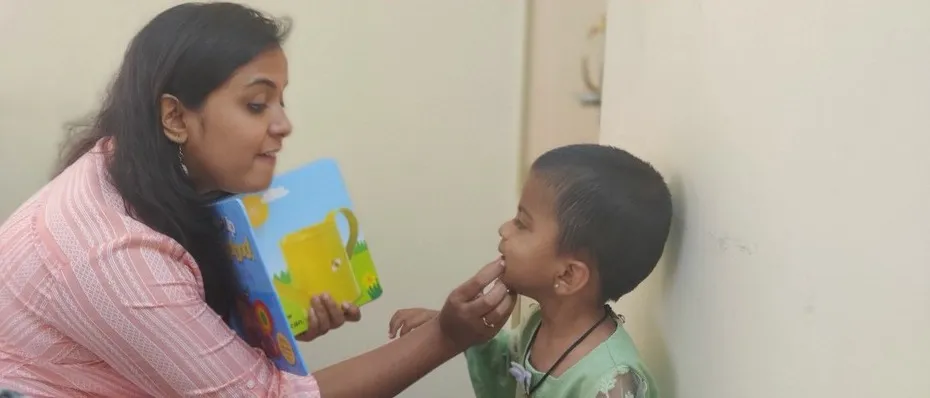
Speech therapy
For late talkers, unclear speech, stammering and apraxia.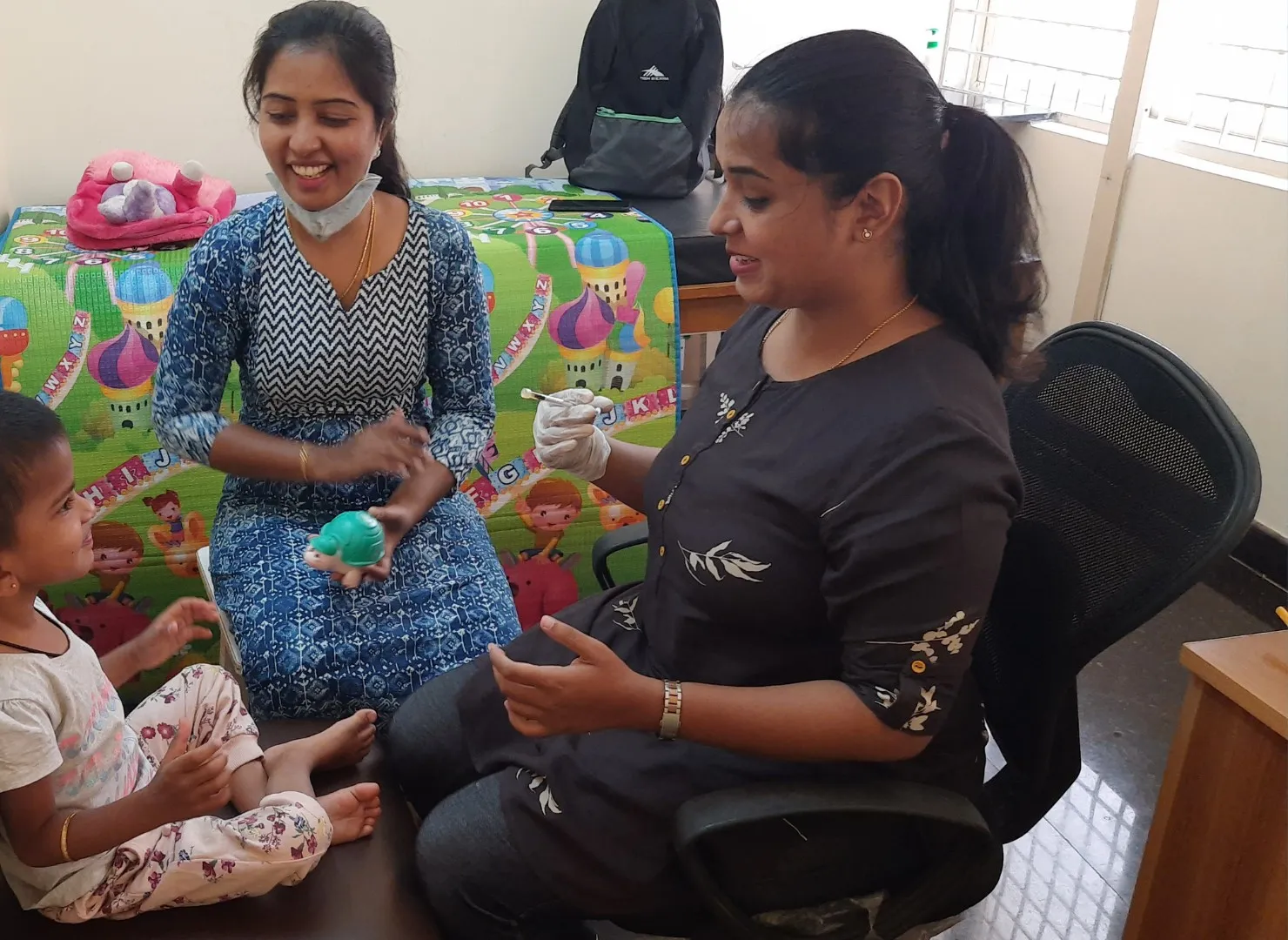
Early intervention
For babies and toddlers, from 3 months to about 5 years, who are slow to reach milestones.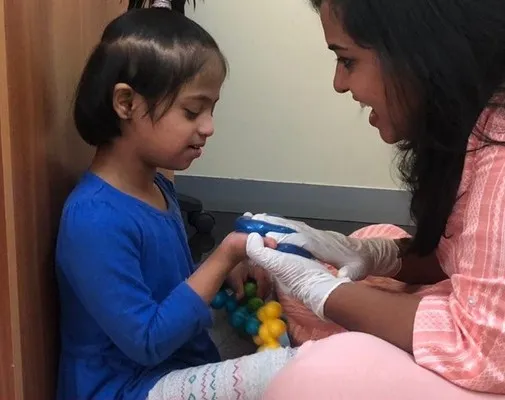
Occupational therapy
For children who find handwriting, movement or everyday tasks like dressing harder than others.
Sensory integration therapy
For children who are over- or under-sensitive to sound, touch or movement.
Wondering if this is right for your child?
Every child’s needs are different. Talk to us, and we’ll think it through with you.